

How much you can save and earn with solar panels
The ability of solar panels to convert sunlight directly into electricity is the key factor in their cost-saving potential. Depending on the size of your solar system, you could significantly cut, your electricity bills. Over the long term, this can result in substantial savings, making the initial cost of installation a worthy investment.
How does generating energy with Solar Panels Work?
Solar panels, or photovoltaic panels, operate on a simple scientific principle known as the “photovoltaic effect”. When sunlight hits the panels, it energises the semiconductor material (commonly silicon). This energy knocks electrons loose, allowing them to flow freely. These moving electrons are harnessed as electric current, which can then be used to power your home.
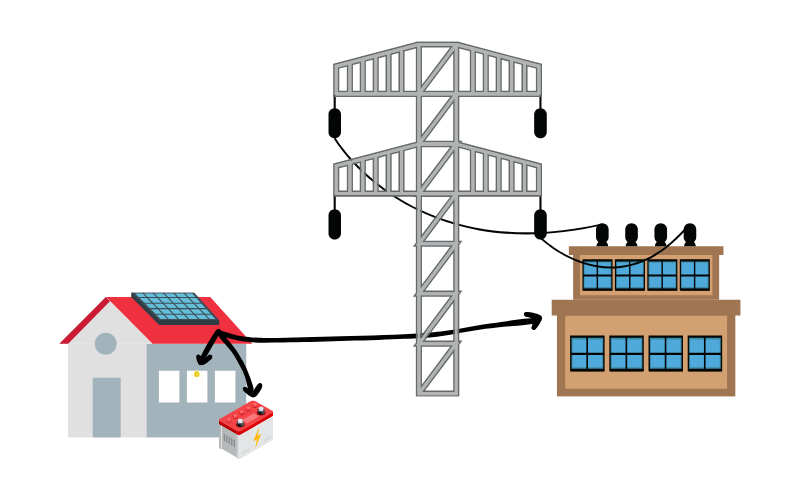
During the sunlit hours, your solar panel system may generate more electricity than you use. In this case, the surplus energy is not wasted. Instead, it can be stored in an optional solar battery for use during the night or overcast days. This stored energy can supply electricity when solar power generation is low or non-existent, ensuring a consistent power supply.
Any excess electricity your solar panels generate can also be exported back to the national grid. Several energy suppliers offer a scheme known as the ‘Smart Export Guarantee’ (SEG), where they pay you for the electricity you export. This allows you to make the most out of your solar panel system, reducing your energy costs and contributing to a greener grid.
How many solar panels do you need?
While it is possible to work this out yourself, getting it absolutely perfect can be intricate. Why not save your time and effort? Please leave it to the experts, who are more than willing to provide this information for free as part of a no-obligation quote. Please take action today and let us assist you in the best possible way!
If you think you can do it, here’s a general guide below:
1. Work out your annual electricity usage
To determine your energy usage, you should begin by carefully reviewing your most recent energy bill. Look closely for a dedicated section stating “Electricity Usage” or “Consumption”. Typically, this information will be measured in kilowatt-hours (kWh), the standard unit of electricity. Your usage might be broken down monthly, quarterly, or even yearly. However, for the next step, you will specifically need this data every year.
2. Decide the wattage of solar panels to use
To determine the size of the solar panel system, you may need an average annual energy consumption of 4,800 kWh; you can use the following formula: System Size (in kilowatts, kW) = 4,800 kWh ÷ (365 days/year × Average Daily Sunlight Hours × Solar Panel Efficiency)
So, for an average annual energy consumption of 4,800 kWh with 5 hours of daily sunlight and 15% efficient solar panels, you would need approximately a 5.26 kW solar panel system to meet your energy needs.
3. Measure how many solar panels you can fit on your roof
The average size per panel will be around 1.6m x 1m, depending on size, make and model; you can use this to assess your roof’s available space. This can be done with a tape measure or specialist measurement tools; it’s a more complex task than it first appears. Your roof’s orientation and the nature of sunlight exposure it receives play a vital role in optimising your solar panels’ efficiency. Typically, for the UK, only south, east, and west-facing roofs are suitable for solar panel installation, with the south being the most effective.
Try our calculator to determine the size of the solar system you need.
Remember, you’ll still need to determine if the system fits your property.
Some Frequently Asked Questions About Savings & Earnings from Solar Panels
Is it worth getting solar panels?
Do solar panels save money?
Which solar panels are the best?
How is your electric bill affected after installing Solar panels?
In the UK, there’s an opportunity to earn money through the Smart Export Guarantee (SEG) by selling surplus energy back to the grid. After the installation, make sure to inform your energy supplier and apply for SEG. This way, you can maximise the benefits of your solar panel system.